Oauth2 Authorization Server
About
OAuth2 Authorization Server with MariaDB, Docker OpenTelemetry LGTM, and Redis Integrations with Spring Boot 4, Java 25 and Docker. Integration Tests with Testcontainers and unit Tests with Junit 5, and Mockito
Details
- Author
- musabbozkurt
- GitHub stars
- 6
- Downloads
- 416
- Categories
- Database
Jump to
- OAuth2 authorization with Spring Boot 4 and Java 25
- Multiple authentication providers (LDAP, database, default users)
- Integration with Redis, MariaDB, and Ollama AI models
- Docker, GraalVM native images, and CRaC support
- Actuator endpoints and Grafana monitoring
- AI model testing via Docker Desktop Model Runner

Setting up with Highlight
This MCP is not yet compatible with Highlight’s one-click setup. However, you can still use it with Highlight by following these steps:
- Download and install Highlight from highlightai.com/download
- Navigate to the plugins tab and select "Add Custom Plugin"
-
Configure the plugin with the settings below
Plugin Name
Oauth2 Authorization ServerCommand (node, npx, python, etc.)Please refer to the README for specific instructions on how to obtain API keys or other required environment variables.
- Enable "Start Automatically" if you want the plugin to start when Highlight launches





From the repository
Install Java 25, Maven, and Docker. Set environment variables for AI model API keys (optional). Run tests with mvn clean verify. Start the application with docker compose --profile start_application up -d --build or using ./mvnw spring-boot:run after starting infrastructure services. Access Swagger UI at http://localhost:9000/swagger-ui/index.html with client ID client and secret secret, and login with default users (Developer/password, Admin/password, User/password).
Claude Desktop / Cursor
Paste into your MCP client config file to install this server.
{
    "mcpServers": {
        "oauth2 authorization server": {
            "oauth2-authorization-server": {
                "command": "docker",
                "args": [
                    "compose",
                    "--profile",
                    "start_application",
                    "up",
                    "-d",
                    "--build"
                ]
            }
        }
    }
}McpServers
{
    "oauth2-authorization-server": {
        "command": "docker",
        "args": [
            "compose",
            "--profile",
            "start_application",
            "up",
            "-d",
            "--build"
        ]
    }
}
OAuth2 Authorization Server with Spring Boot 4 and Java 25
Prerequisites
- Java 25 should be installed --> export JAVA_HOME=$(/usr/libexec/java_home -v 25)
- Maven should be installed
- Docker should be installed
- Postman can be installed
How to Run and Test
- Run the following commands to set environment variables for AI model API keys
-
        export OPENAI_API_KEY=your_api_key_here

        export DEEPSEEK_API_KEY=your_api_key_here

        export ANTHROPIC_API_KEY=your_api_key_here      # Optional

        export GOOGLE_GENAI_API_KEY=your_api_key_here   # Optional
-
    cd oauth2-authorization-server


    # Run tests on the host (requires Docker for Testcontainers)

    mvn clean verify


    # Build and start the application together with all infrastructure services

    docker compose --profile start_application up -d --build


    # Start only infrastructure services (Redis, MariaDB, LDAP, Ollama, etc.)

    docker compose up -d


    # For local development without Docker (requires infrastructure services running via docker compose up -d)

    ./mvnw spring-boot:run   # or: mvn spring-boot:run
- Import the followings to test in Postman
- OAuth2 Authorization Server.postman_collection.json
- OAuth2 Authorization Server.postman_environment.json
- Swagger: http://localhost:9000/swagger-ui/index.html
- Click Authorize and enter the following credentials
- client_id: client
- client_secret: secret
- Use one of the following default values to log in http://localhost:9000/login
- username: Developer password: password
- username: Admin password: password
- username: User password: password
- Actuator: http://localhost:9000/actuator/
- Database credentials
- url: jdbc:mariadb://localhost:3306/oauth2_authorization_server
- username: mb_test
- password: test
- Redis
- host: localhost
- port: 6379
- Redis Insight: http://localhost:5540/
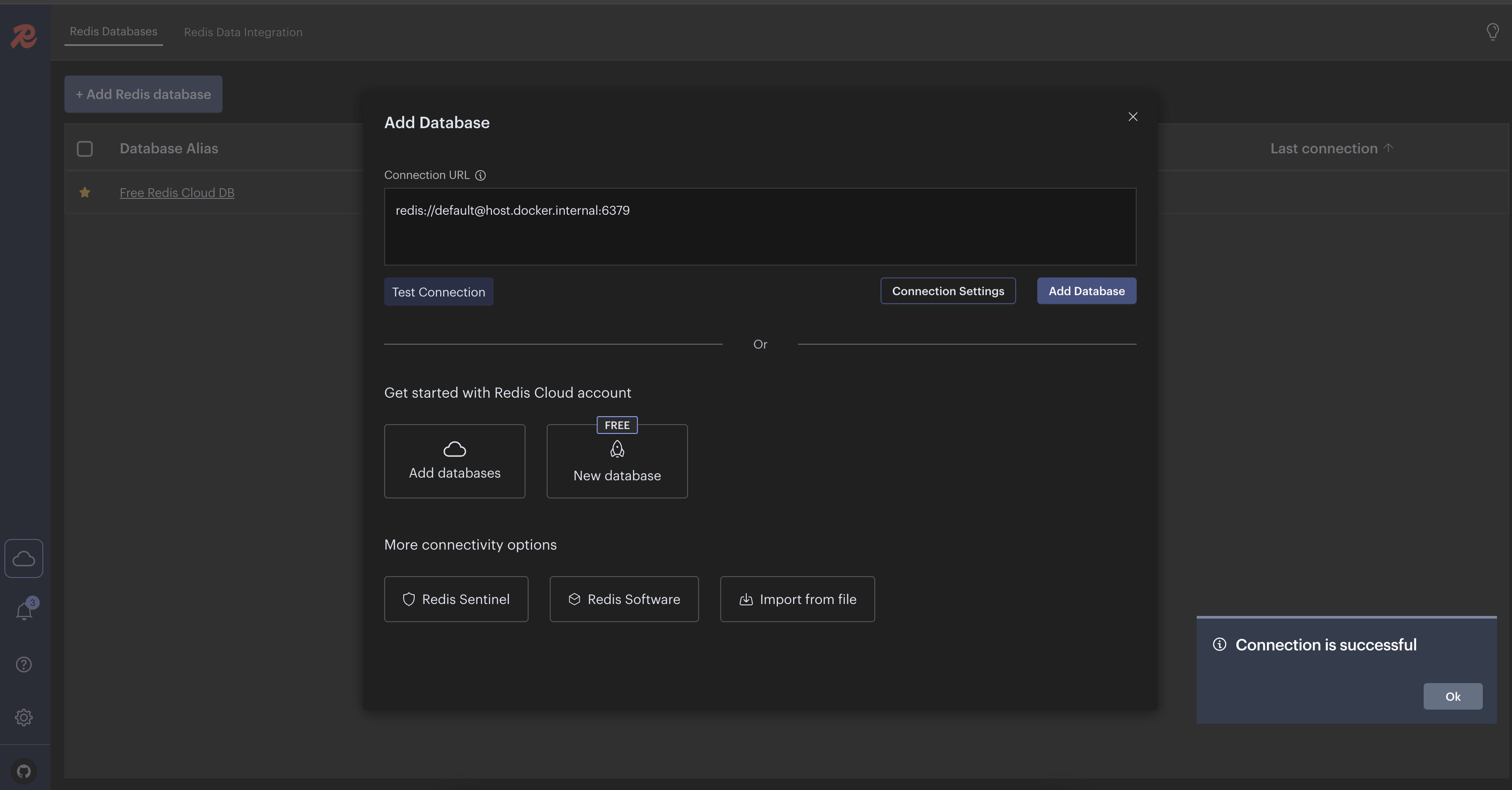
- Click Add Redis database
- Connection URL --> redis://default@host.docker.internal:6379
- Click Add Database
- 
- Ollama
- http://localhost:3000/ sign up for an account for local environment
- Search for mxbai-embed-large and download it if it does not exist
- Search for mistral and download it if it does not exist
- Search for deepseek-r1:7b and download it if it does not exist
- Grafana UI
- http://localhost:3001/
- username: admin
- password: admin
Debugging Spring Boot Tests in IntelliJ IDEA
1. Run one of the below commands in the terminal
- mvn test -Dmaven.surefire.debug
- If port 5005 is already in use, you can specify a custom port
- mvn test -Dmaven.surefire.debug="-Xdebug -Xrunjdwp:transport=dt_socket,server=y,suspend=y,address=8000"
2. Open IntelliJ IDEA
3. Go to Run > Attach to Process (or use shortcut)
- Windows/Linux: Ctrl + Alt + 5
- Mac: Cmd + Alt + 5
4. Select the Java process running your tests
5. The test will pause until you connect your debugger. Once connected, you can use breakpoints and step through your
code.
How to Run and Test with CDC(Class Data Sharing)
- Java 25+ should be installed
- Run ./mvnw clean install or./mvnw clean install -Paot or ./mvnw -Paot package command to build the application
with AOT
- Run docker-compose up -d command to run necessary services
- Run docker build -t oauth2-authorization-server -f DockerfileForAOTCache . command to build the image
- Run docker run -d --restart=always -p 9000:9000 oauth2-authorization-server:latest command to run the image
How to Run and Test Native Image with GraalVM
- Java 25 GraalVM edition should be installed
- Run docker-compose up -d command to run necessary services
- Run ./mvnw -Pnative native:compile or ./mvnw -Pnative native:compile -DskipTests command to build the native image
- Run ./target/oauth2-authorization-server command to run the native image
- Install Grype (OPTIONAL)
- Run native-image-inspect ./target/oauth2-authorization-server-0.0.1 | grype -v command to scan vulnerabilities
- Run native-image-inspect ./target/oauth2-authorization-server-0.0.1 >output.json command and open output.json or
visit http://localhost:9000/actuator/sbom/native-image to inspect all libraries, methods etc. used in the native image
- Run open ./target/oauth2-authorization-server-build-report.html to see build report
- Use Swagger UI to test the application
Spring Boot with CRaC(Coordinated Restore at Checkpoint) by Creating Ready to Restore Container Image.
- Warning: for real projects make sure to not leak sensitive data in CRaC files since they contain a snapshot of the
memory of the running JVM instance.
- Checkpoint
- Run
on demand checkpoint/restore of a running application
with: ./docs/scripts/checkpoint.sh
- Run
an automatic checkpoint/restore at startup
with: ./docs/scripts/checkpointOnRefresh.sh
- Restore
- Restore the application with: ./docs/scripts/restore.sh
- Use Swagger UI to test the application
How to Run and Test AI Models Locally with Docker Desktop Model Runner
- Requires: Docker Desktop 4.40 and later
- Run docker-compose up -d command to run necessary services
- Run docker model pull ai/gemma3:4B-Q4_K_M command to pull the model
- Run docker model run ai/gemma3:4B-Q4_K_M command to run the model to test it from the command line (OPTIONAL)
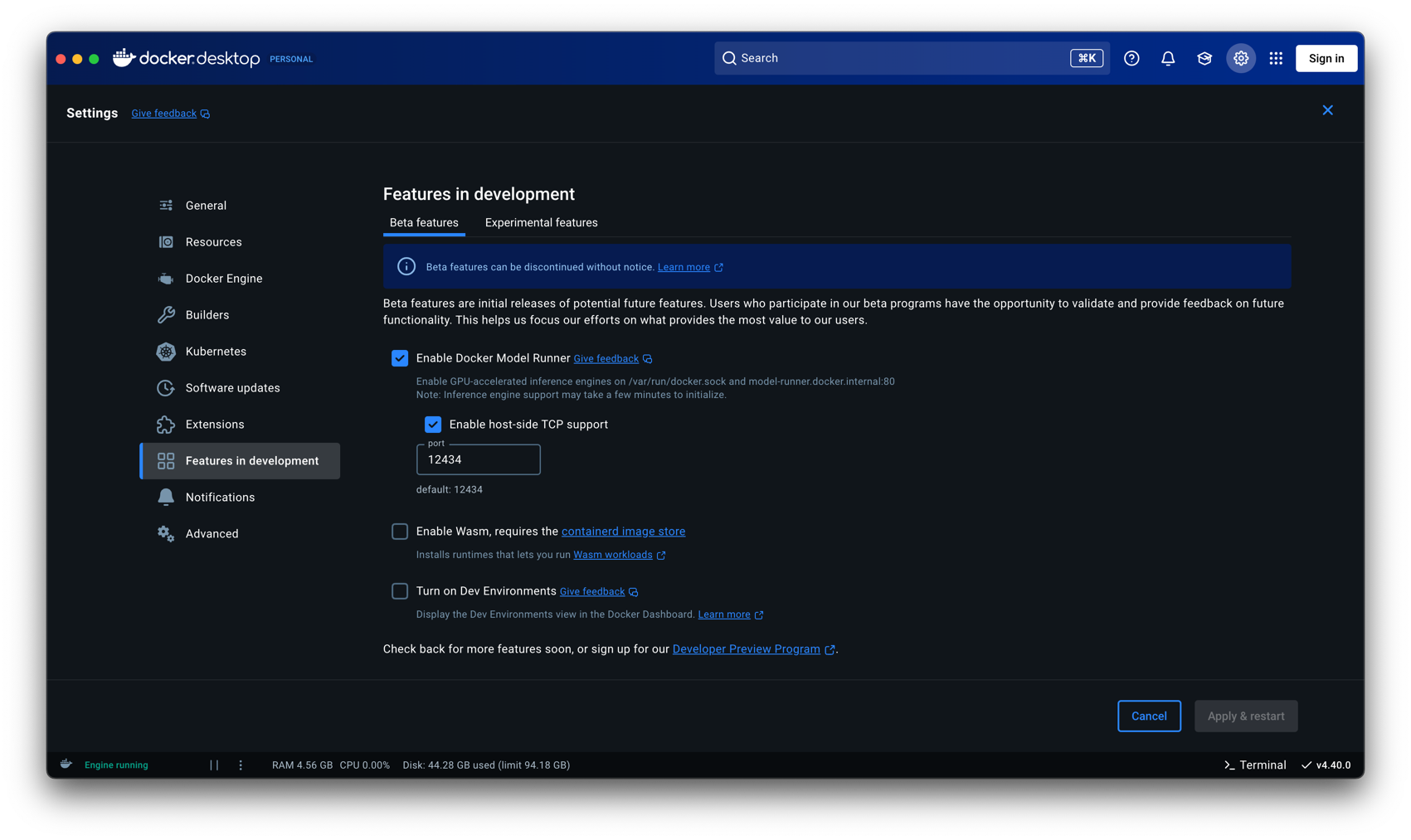
- Docker Desktop --> Settings --> Features in development --> Beta features --> Enable Docker Model Runner -->
Enable host-side TCP support --> Apply & Restart
- 
- Run mvn test or mvn clean install or mvn clean package or ./mvnw clean install command to run all the tests
- Run mvn spring-boot:run command to run the application
- Use Swagger UI to test the application
Dependency Version Management
Dependency versions are managed via
the Maven Versions Plugin and a version-rules.xml filter
that excludes alpha/beta/RC/SNAPSHOT releases.
Local — using the helper script:
./docs/scripts/update-versions.sh check           # Show all outdated versions (parent + props + deps + plugins)
./docs/scripts/update-versions.sh update          # Auto-update everything and review with: git diff pom.xml
./docs/scripts/update-versions.sh update-props    # Update only <properties> versions (safest)
./docs/scripts/update-versions.sh update-parent   # Update only spring-boot-starter-parent
./docs/scripts/update-versions.sh revert          # Revert pom.xml from backup
CI/CD — automated PR creation:
The MB Dependency Version Update workflow runs every Monday (and on-demand),
checks for updates, verifies the build compiles, and creates a PR automatically.
References
- Spring Boot 3 Tutorial Security OAuth2 Spring Authorization Server Save login data to a database
- Spring Boot LDAP Authentication from scratch with Spring Security and LDAP Server
- BCryptPasswordEncoderTests
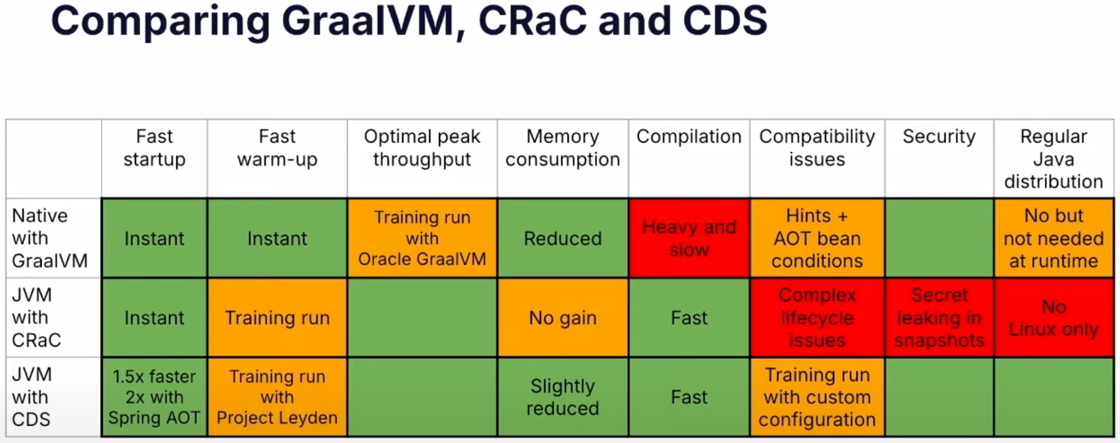
- Efficient Containers with Spring Boot 3, Java 21 and CDS (SpringOne 2024)
- https://medium.com/ekino-france/a-comprehensive-guide-to-using-class-data-sharing-cds-with-spring-boot-1ee8e6e9b2a6
- https://bell-sw.com/blog/how-to-use-cds-with-spring-boot-applications/
- 
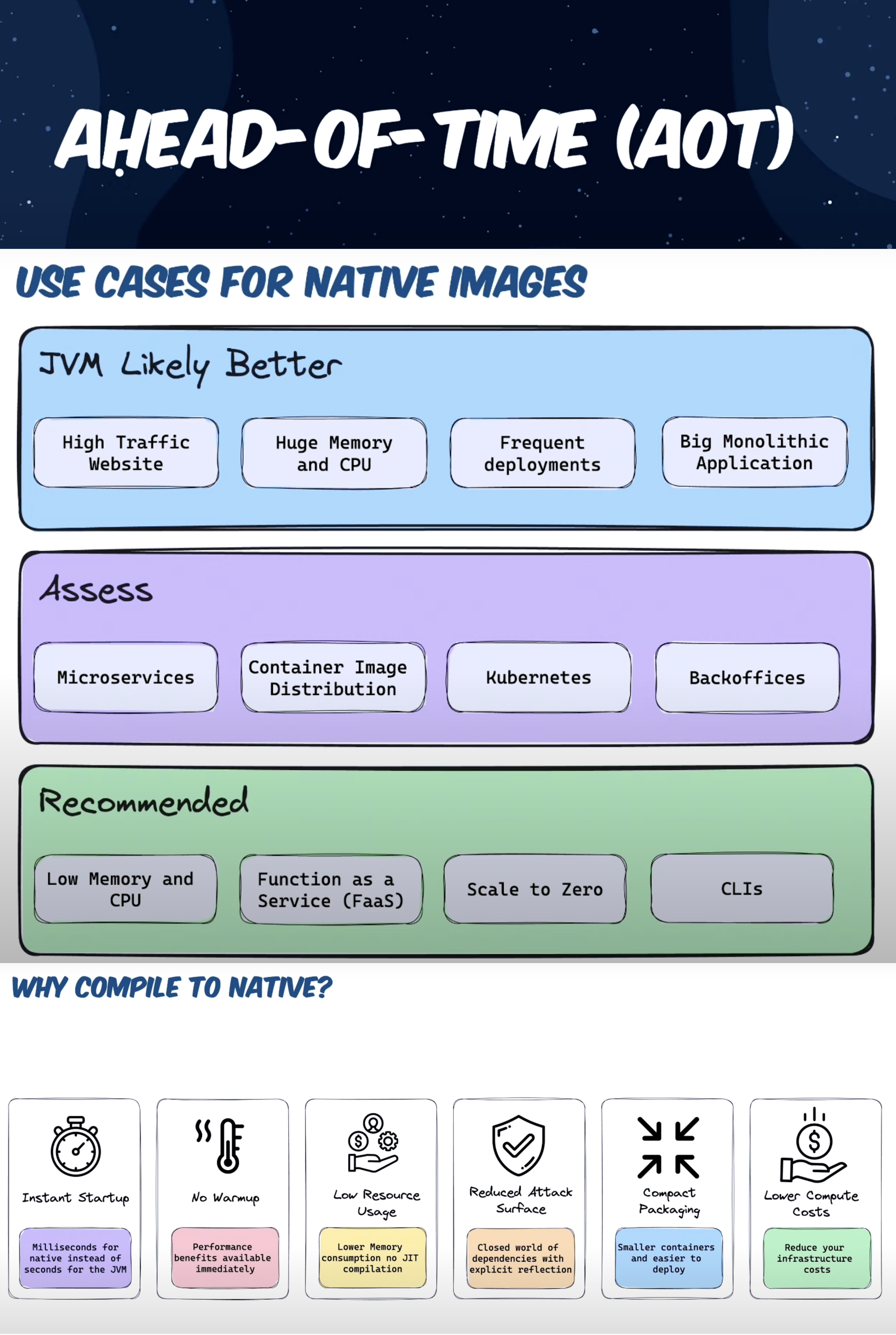
- Getting started with Spring Boot AOT + GraalVM Native Images
- 
- Master Spring Data AOT in IntelliJ IDEA
- Welcome, GraalVM for JDK 24!🚀
- A vulnerability scanner for container images and filesystems Grype
- Introduction to Project CRaC: Enhancing Runtime Efficiency in Java & Spring Development
- Model Context Protocol (MCP)
- MCP Server Boot Starter
- Model Context Protocol (MCP) Explained: How to Give AI Access to Your Files, Web Searches & More
- 
- Ollama Installation with Docker Compose
- Ollama Chat
- A Guide to Spring AI Advisors
- Testing LLM Responses Using Spring AI Evaluators
- Vector Databases
- Java + RAG: Create an AI-Powered Financial Advisor using Spring AI 💡
- Retrieval Augmented Generation (RAG)
- 
- Run AI Models Locally: Zero API Keys, Zero Fees with Docker Desktop Model Runner
- Docker Model Runner
- Spring AI 2.0 M1 with Spring Boot 4 Integration
- A Step-by-Step Guide for Installing and Using AppMap for Java
- AppMap Maven plugin
- AppMap: Free AI Architect IntelliJ Plugin
Sign in to leave a review
Use Google, GitHub, or an email account so ratings stay tied to real people.
No reviews posted yet.