
MCP (Model Context Protocol)
About
The Model Context Protocol (MCP) is a standardized way introduced by Anthropic for LLMs to interact with external tools, functions, and inject context. It allows models to request real-time information, execute actions in external systems, access specialized knowledge, and…
Details
- Author
- kabragaurav
- Downloads
- 372
- Categories
- Other, AI
Jump to
- Standardized interface for LLM-tool interaction.
- Exposes Tools, Resources, and Prompts.
- Supports STDIO for local and SSE for remote transport.
- Reduces API breaking changes via independent server maintenance.

Setting up with Highlight
This MCP is not yet compatible with Highlight’s one-click setup. However, you can still use it with Highlight by following these steps:
- Download and install Highlight from highlightai.com/download
- Navigate to the plugins tab and select "Add Custom Plugin"
-
Configure the plugin with the settings below
Plugin Name
MCP (Model Context Protocol)Command (node, npx, python, etc.)Please refer to the README for specific instructions on how to obtain API keys or other required environment variables.
- Enable "Start Automatically" if you want the plugin to start when Highlight launches





From the repository
Initialize a Node.js project with npm init and install the SDK using npm install @modelcontextprotocol/sdk. Create an index.js that implements the server. In Cursor IDE, configure it by creating an mcp.json file with the node command and the absolute path to the script as arguments. Use STDIO transport for local development and SSE for remote connections.
Claude Desktop / Cursor
Paste into your MCP client config file to install this server.
{
    "mcpServers": {
        "mcp (model context protocol)": {
            "Gaurav Kabra's MCP Server": {
                "command": "node",
                "args": [
                    "/Users/gauravkabra/Desktop/MCPServer/index.js"
                ]
            }
        }
    }
}McpServers
{
    "Gaurav Kabra's MCP Server": {
        "command": "node",
        "args": [
            "/Users/gauravkabra/Desktop/MCPServer/index.js"
        ]
    }
}
MCP (Model Context Protocol)
by Gaurav KabraThe Model Context Protocol (MCP) is a standardized way, introduced by Anthropic, for LLMs to interact with external tools and functions and injecting context in LLMs. It allows models to:
Request real-time information
Execute actions in external systems
Access specialized knowledge
Interact with APIs and services
→ Agents
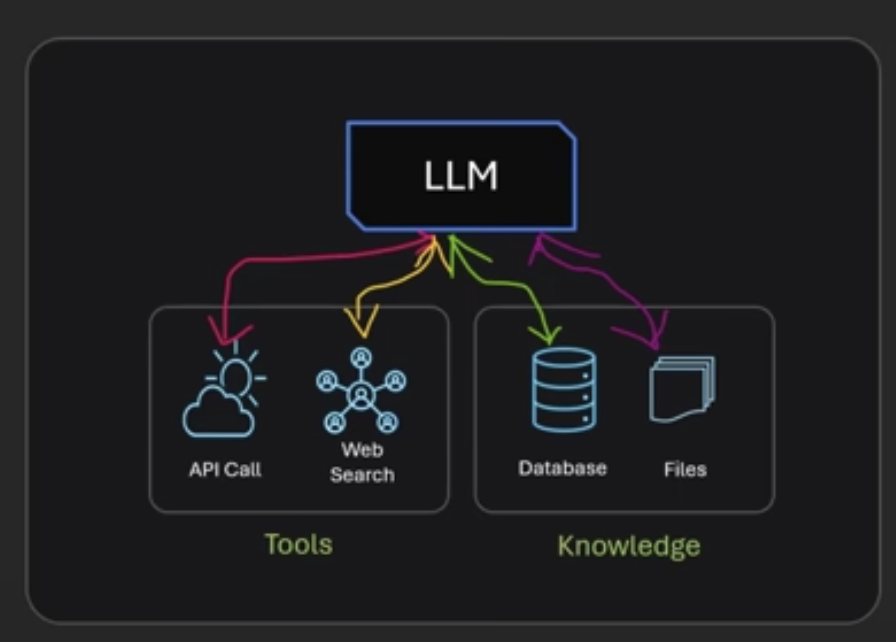 → MCP
→ MCP
The 2nd figure is like this:
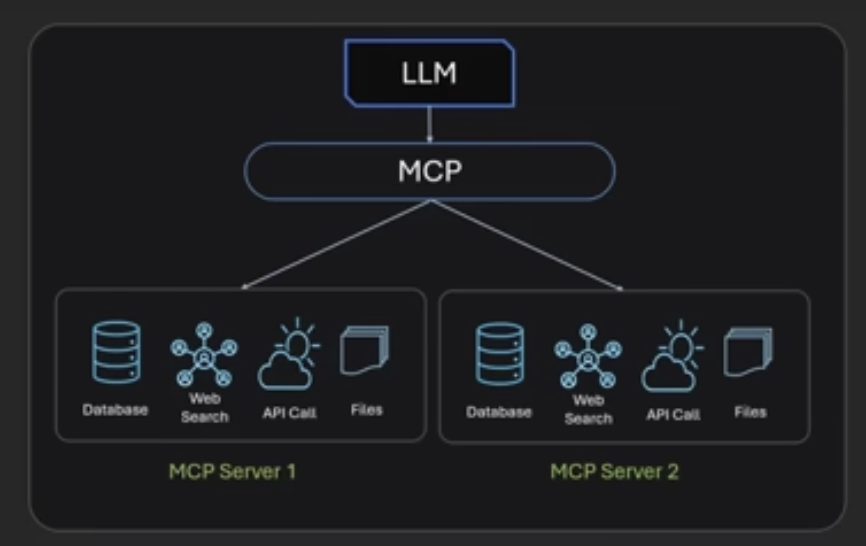
So we improve and get to the 3rd figure, which is similar to:
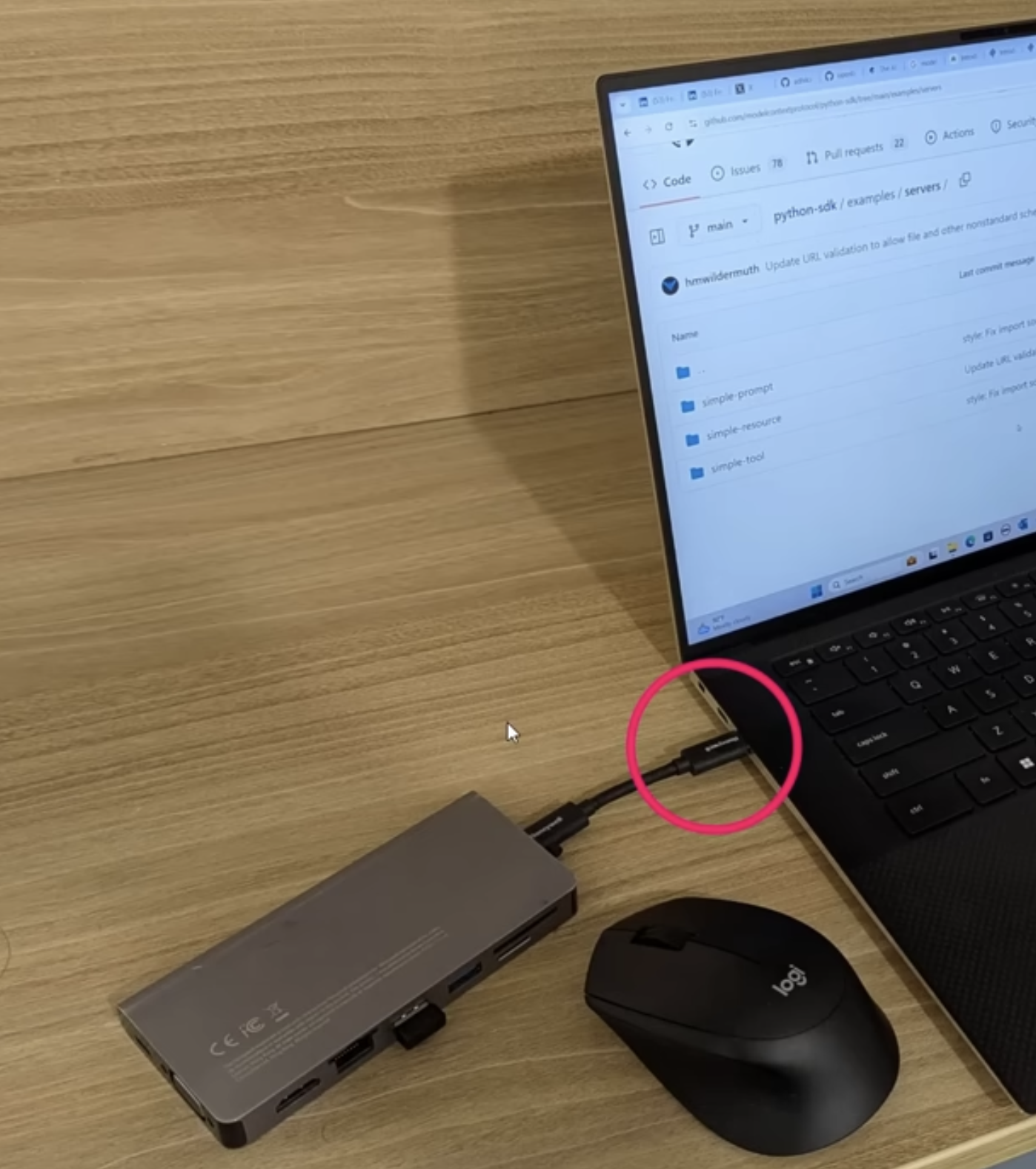
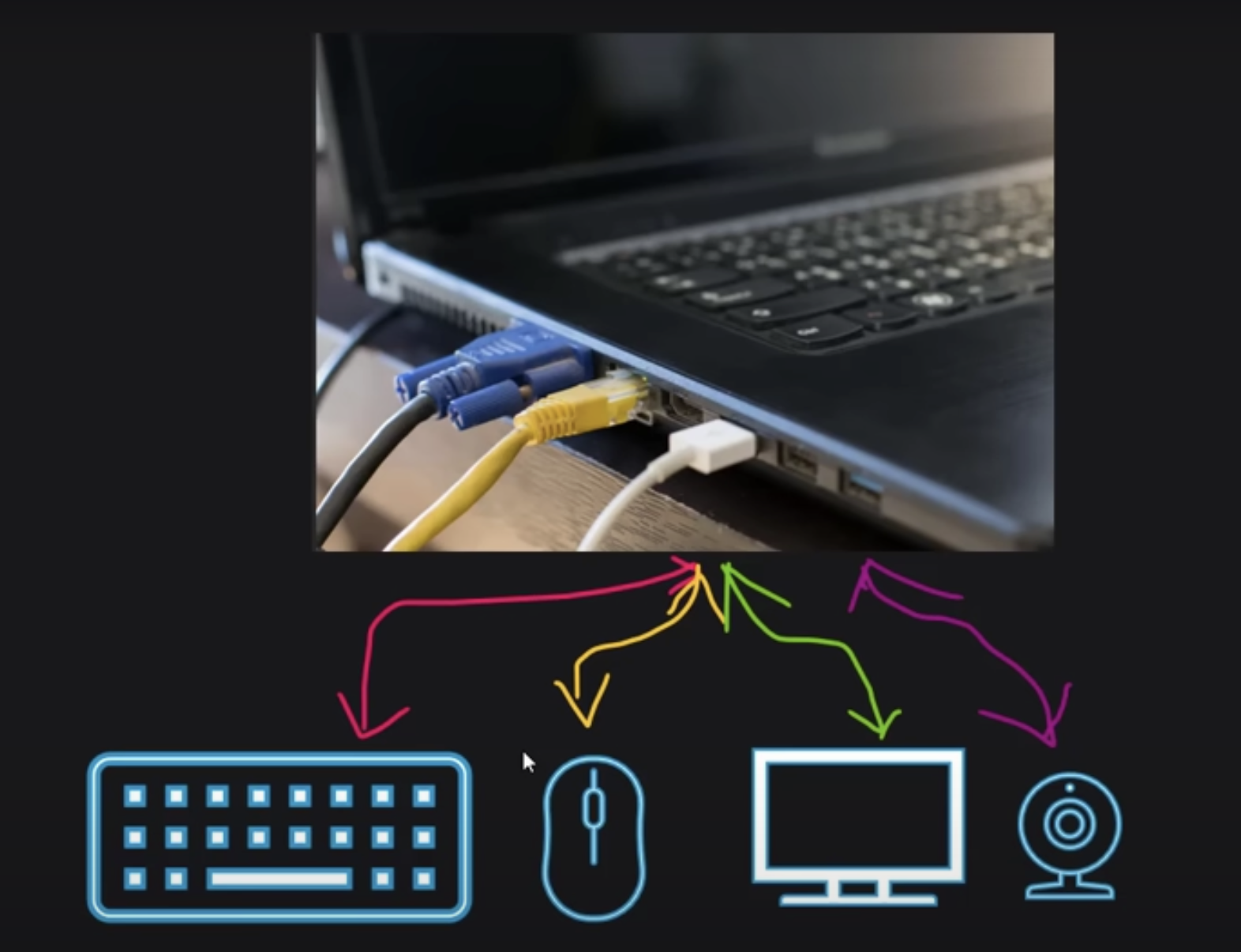
The MCP is similar to USB hub in above picture.
Due to it being a standard, changes become in a standard way. So less chances of API breaking since each MCP server is now being maintained by individual companies (Yahoo or Google etc.) and we just integrate with them.
An MCP server will expose 3 things:
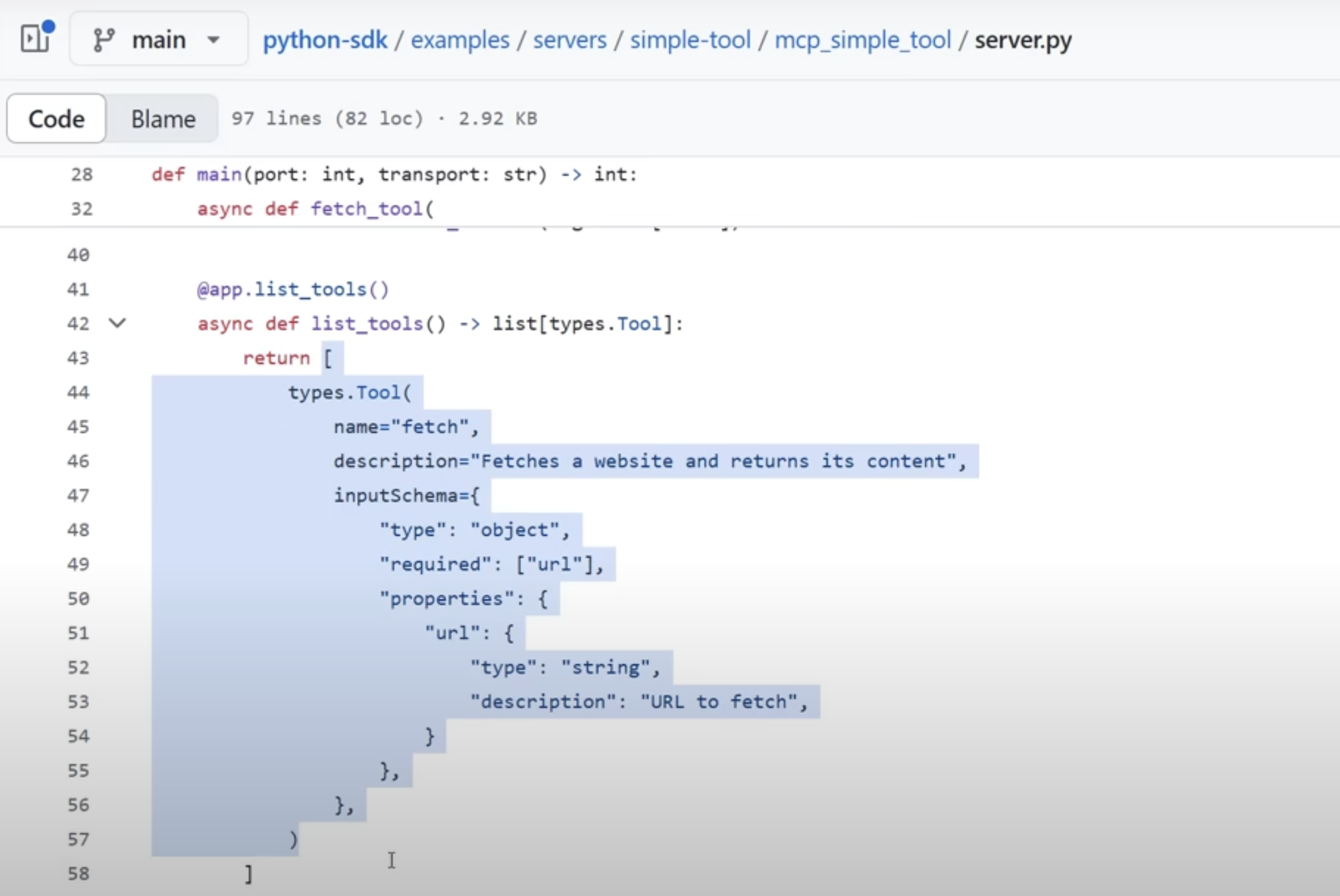
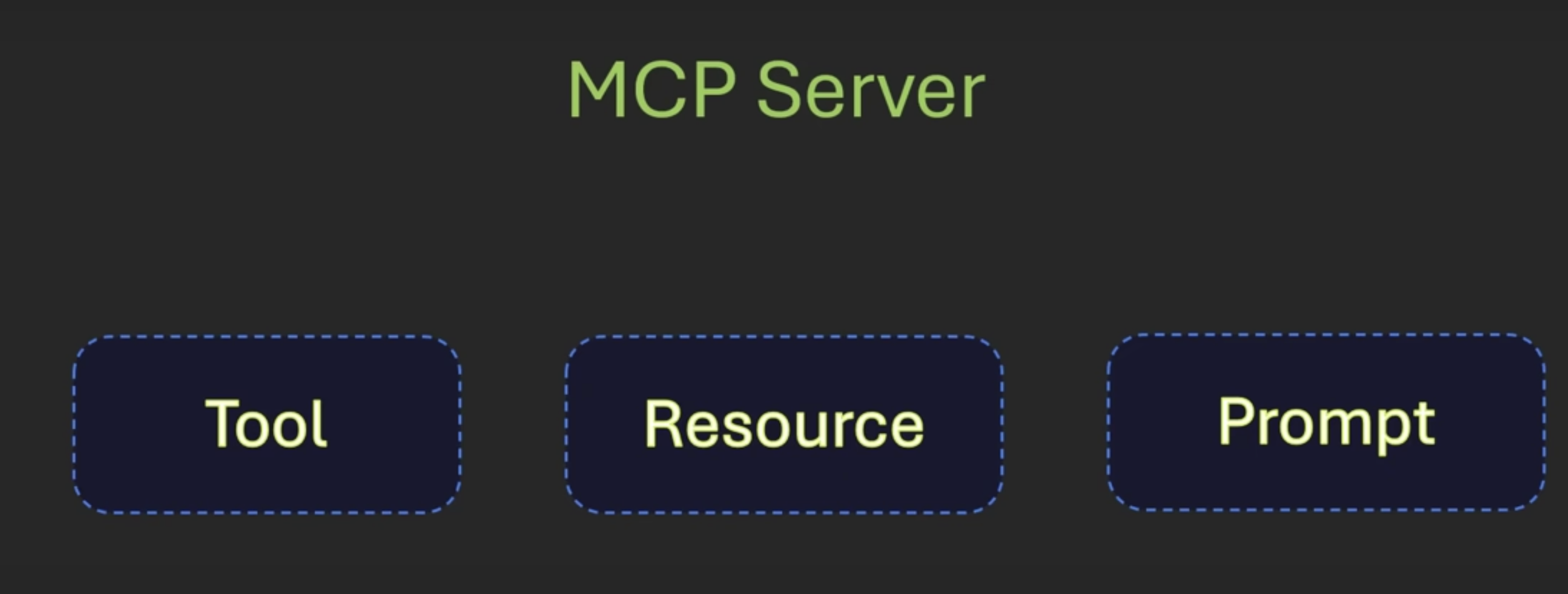 Tool:
Tool:
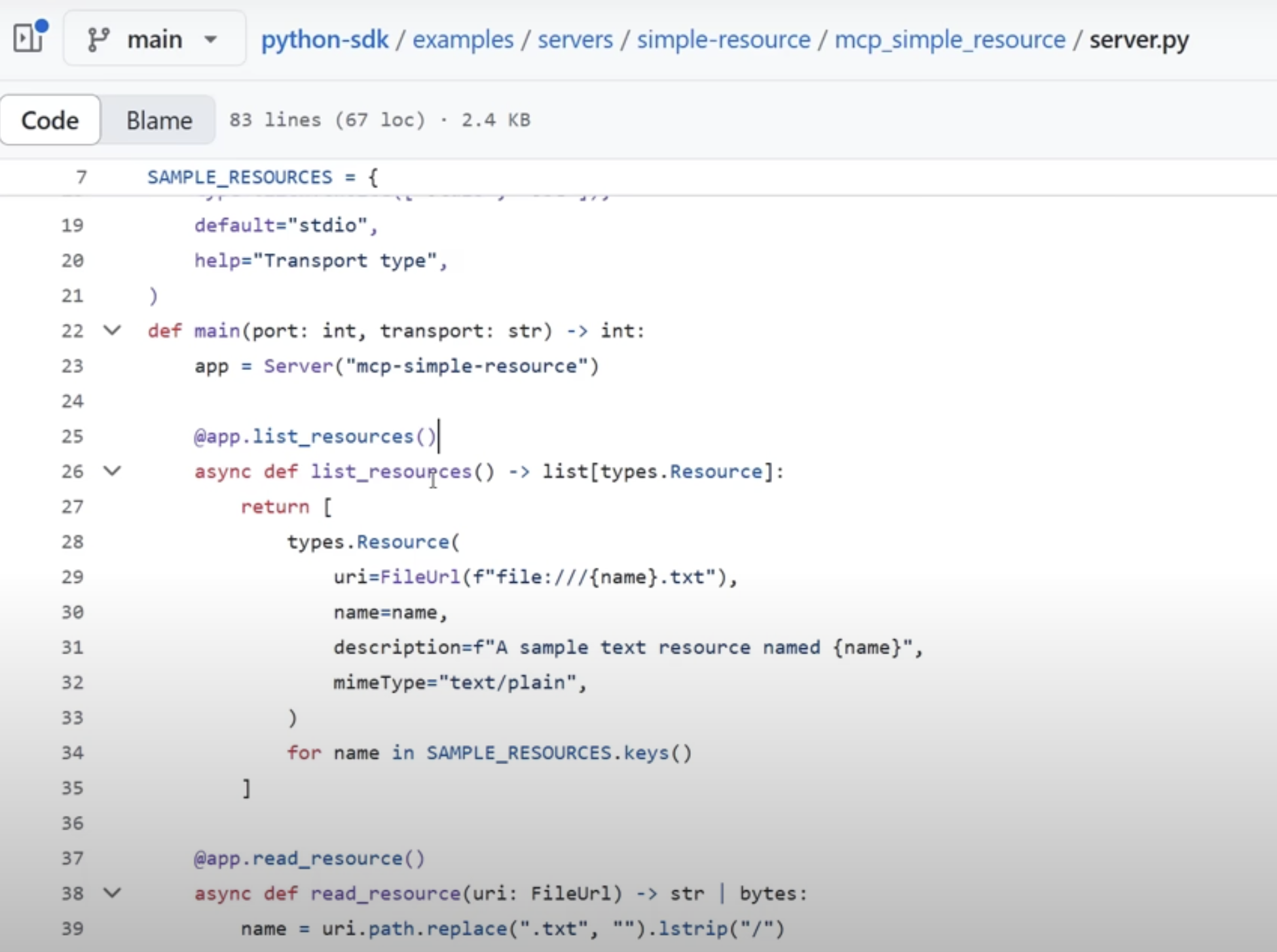
Resource: includes knowledge base, DB, files etc.
Prompt:
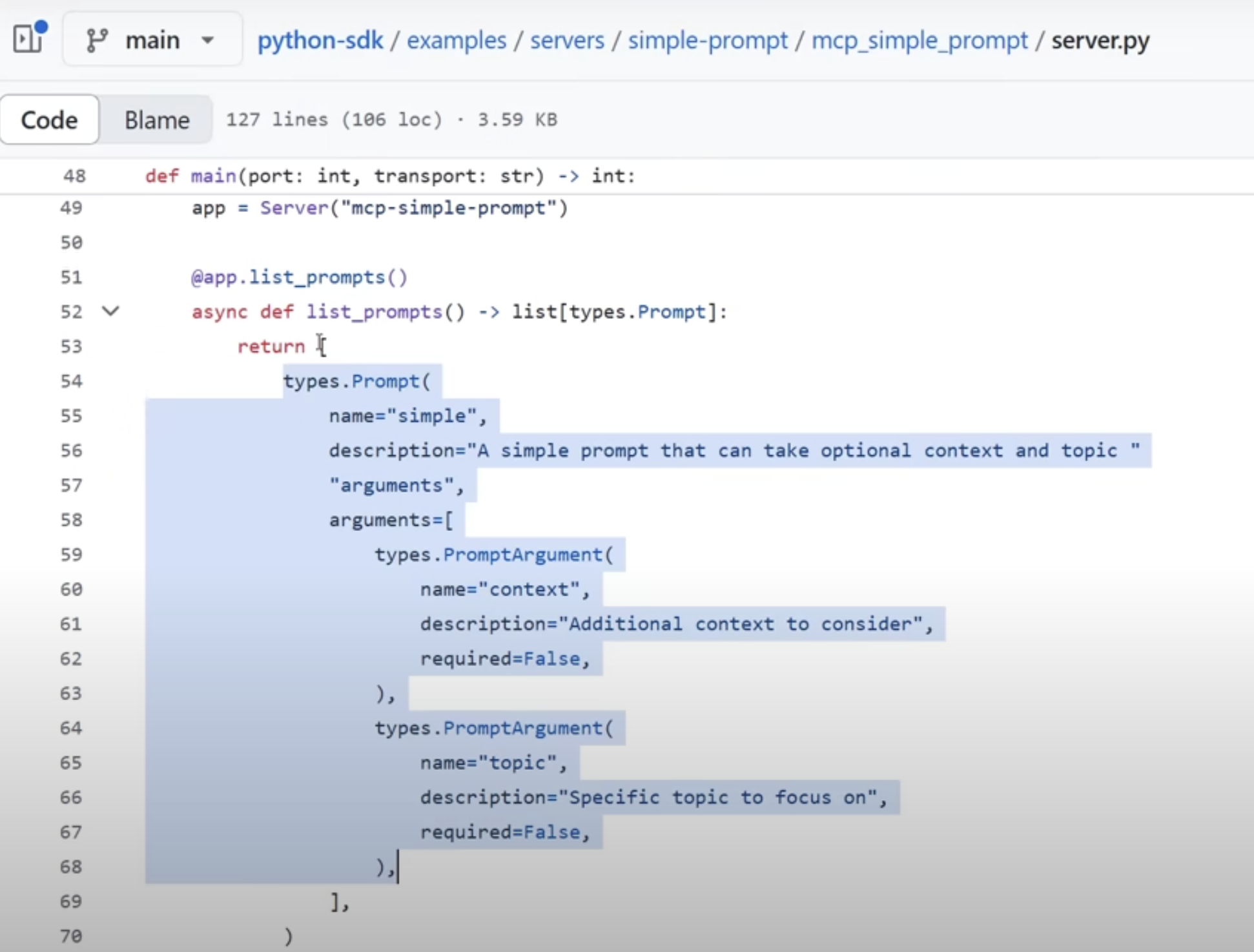
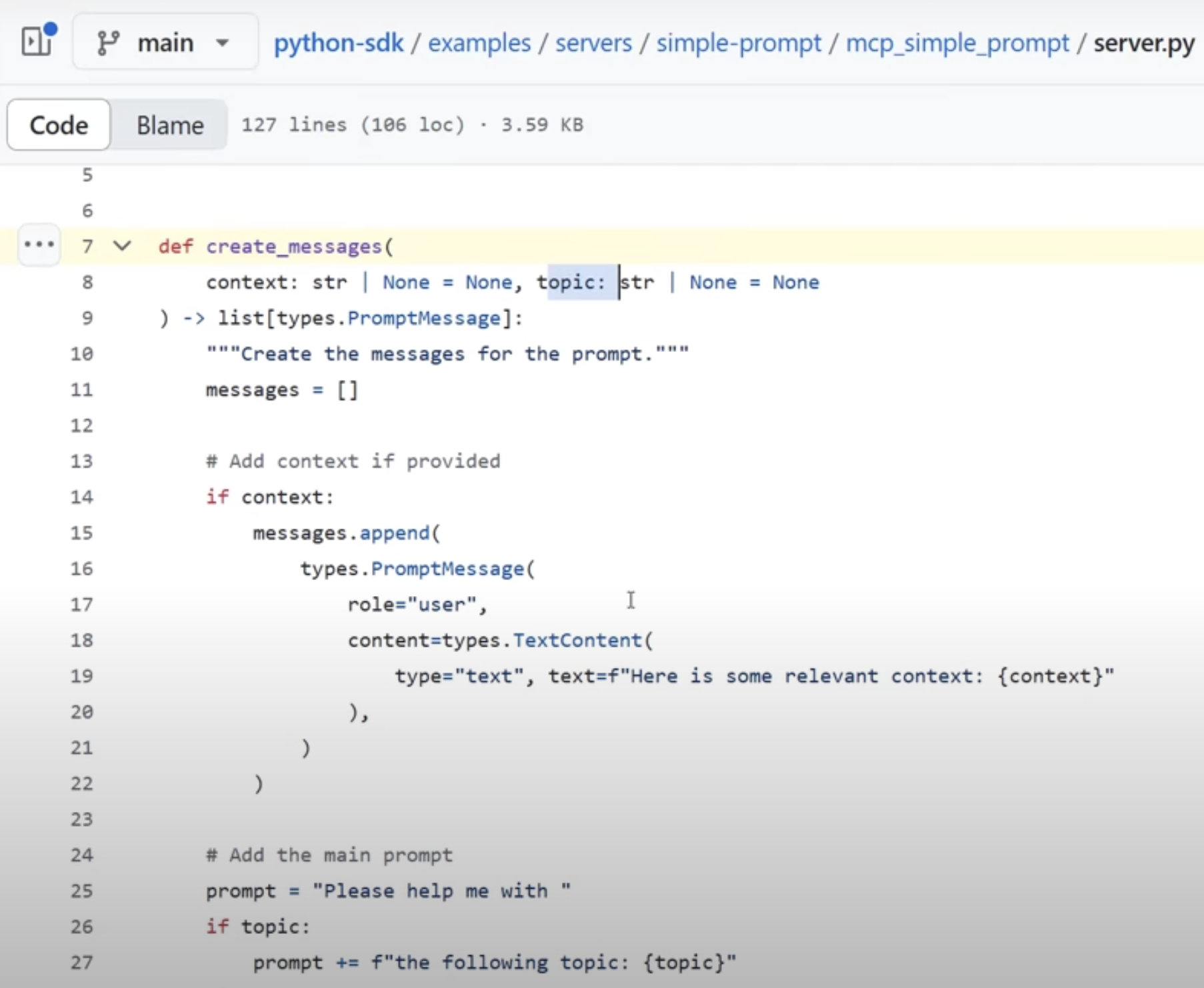
You can refer this for above images.
Setup From Scratch
mkdir mcpserver
npm init
npm install @modelcontextprotocol/sdk
See this for official documentation.
Now in Cursor IDE, click on Settings cog -> MCP. Create the file mcp.json and put below code:
{
    "mcpServers": {
        "Gaurav Kabra's MCP Server": {
        "command": "node",
        "args": ["/Users/gauravkabra/Desktop/MCPServer/index.js"]
        }
    }
}
Replace args with absolute path (full path) of index.js on your local.
And now it should show the add tool available:
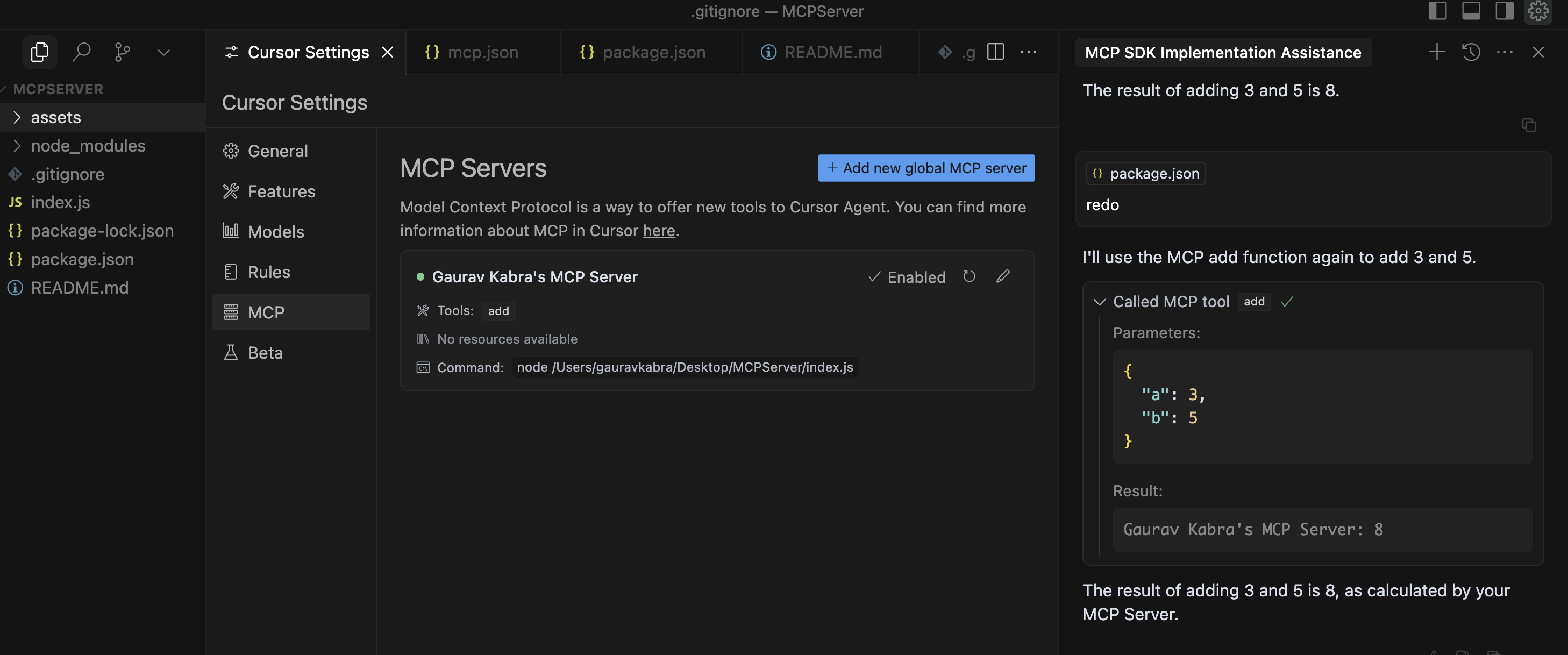
You can find documentation here.
Do CMD + I and ask to add two numbers and you should see a response which we coded in index.js.
STDIO (Standard Input-Output) is ideal on local but for remote we use SSE transport (Server Sent Event). See this to know more.
Sign in to leave a review
Use Google, GitHub, or an email account so ratings stay tied to real people.
No reviews posted yet.





