Microsoft Security Copilot
About
Integrates Microsoft Security Copilot with Microsoft Sentinel for running KQL queries, managing skillsets, and executing prompts using Azure Identity Authentication
Details
- Author
- jguimera
- Repository
- jguimera/SecurityCopilotMCPServer
- GitHub stars
- 18
- Downloads
- 347
- License
- MIT License
- Categories
- Productivity, Developer Tools, Design, Workplace, AI, Frontend, Cloud Service, Security
- Tags
- #integration
Jump to
- Sentinel Integration: Execute KQL queries against your Sentinel workspace
- Security Copilot Management:
- List existing skillsets/plugins
- Upload new or update existing skillsets/plugins
- Run prompts or skills within Security Copilot
- Authentication Support: Multiple authentication methods including interactive browser, client secret, and managed identity

Setting up with Highlight
This MCP is not yet compatible with Highlight’s one-click setup. However, you can still use it with Highlight by following these steps:
- Download and install Highlight from highlightai.com/download
- Navigate to the plugins tab and select "Add Custom Plugin"
-
Configure the plugin with the settings below
Plugin Name
Microsoft Security CopilotCommand (node, npx, python, etc.)npxArguments-
Argument 1
-y -
Argument 2
@highlight/mcp-server
Please refer to the README for specific instructions on how to obtain API keys or other required environment variables.
-
Argument 1
- Enable "Start Automatically" if you want the plugin to start when Highlight launches





From the repository
You can use this MCP server from the Client of your choice. In this repo you can find intructions and config files for Cursor.
Add the .cursor folder inside your client project to enable the MCP tools.
This folder contains two files:
1. Cursor Project Rules (securitycopilotdev.mdc): This file include some Custom Cursor Rules to help the agents in the process definition and understanding user prompts.
2. MCP Client Configuration (mcp.json): File that connects Cursor to the MCP server.
You can invoke the tool directly using /tool_name parameter1="Value of the tool parameter"
For example: /run_prompt content="List the most recent risky users"
More info: https://docs.cursor.com/context/model-context-protocol#configuring-mcp-servers
run_sentinel_query
Execute KQL queries in Sentinel.
get_skillsets
List skillsets in Security Copilot.
upload_plugin
Upload or update a skillset/plugin.
run_prompt
Run a prompt or skill in Security Copilot.
The MCP server provides the following tools:
1. run_sentinel_query: Execute KQL queries in Sentinel
2. get_skillsets: List skillsets in Security Copilot
3. upload_plugin: Upload or update a skillset/plugin
4. run_prompt: Run a prompt or skill in Security Copilot
Claude Desktop / Cursor
Paste into your MCP client config file to install this server.
{
    "mcpServers": {
        "microsoft security copilot": {
            "env": {},
            "args": [
                "-y",
                "@highlight/mcp-server"
            ],
            "command": "npx"
        }
    }
}Linux
{
    "env": [],
    "args": [
        "-y",
        "@highlight/mcp-server"
    ],
    "command": "npx"
}
Macos
{
    "env": [],
    "args": [
        "-y",
        "@highlight/mcp-server"
    ],
    "command": "npx"
}
Windows
{
    "env": [],
    "args": [
        "/c",
        "npx",
        "-y",
        "@highlight/mcp-server"
    ],
    "command": "cmd"
}
Security Copilot and Sentinel MCP Server
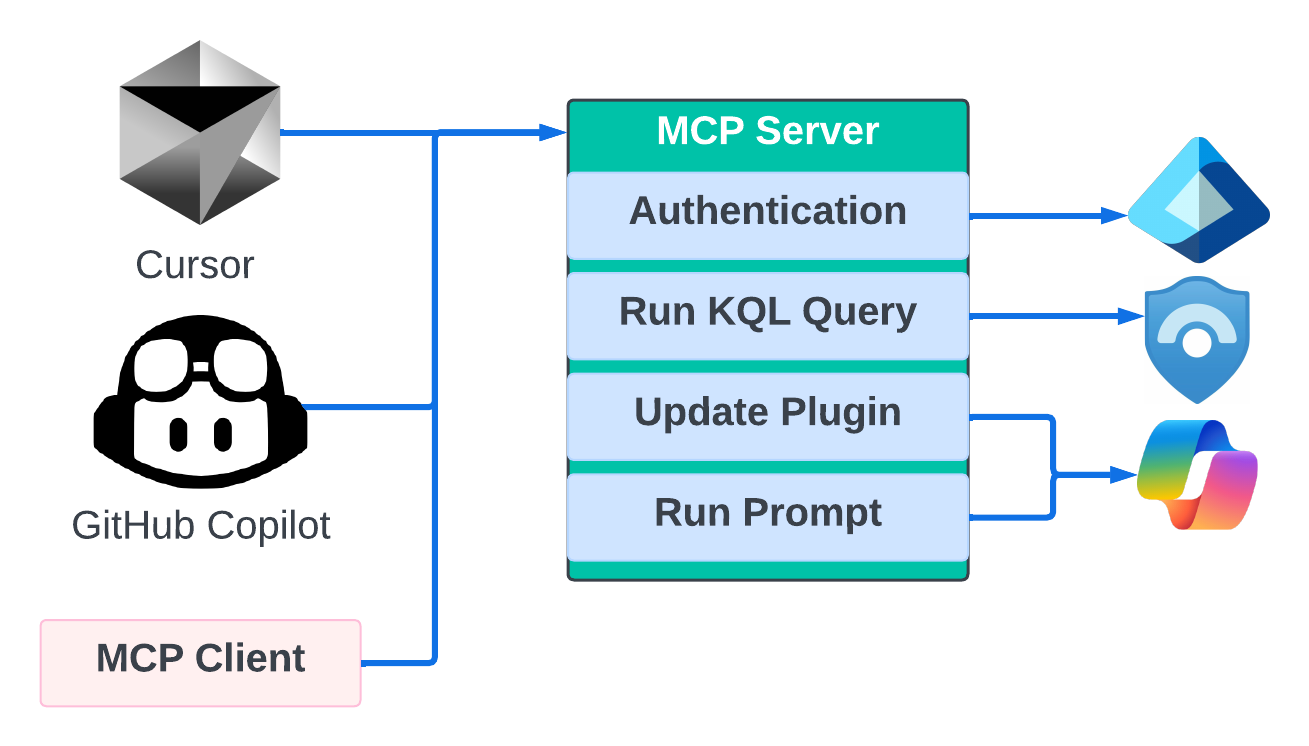
A Python-based MCP server using FastMCP library that provides integration with Microsoft Security Copilot and Microsoft Sentinel using Azure Identity Authentication.
Overview
This project implements an MCP server that enables:
- Running KQL queries against Microsoft Sentinel
- Uploading/Updating Microsoft Security Copilot skillsets/plugins
- Running prompts and skills in Microsoft Security Copilot
The server acts as a bridge between development environments and Microsoft Security Copilot, allowing for testing, deployment, and execution of skills and plugins. It uses SSE as transport layer for the MCP server.
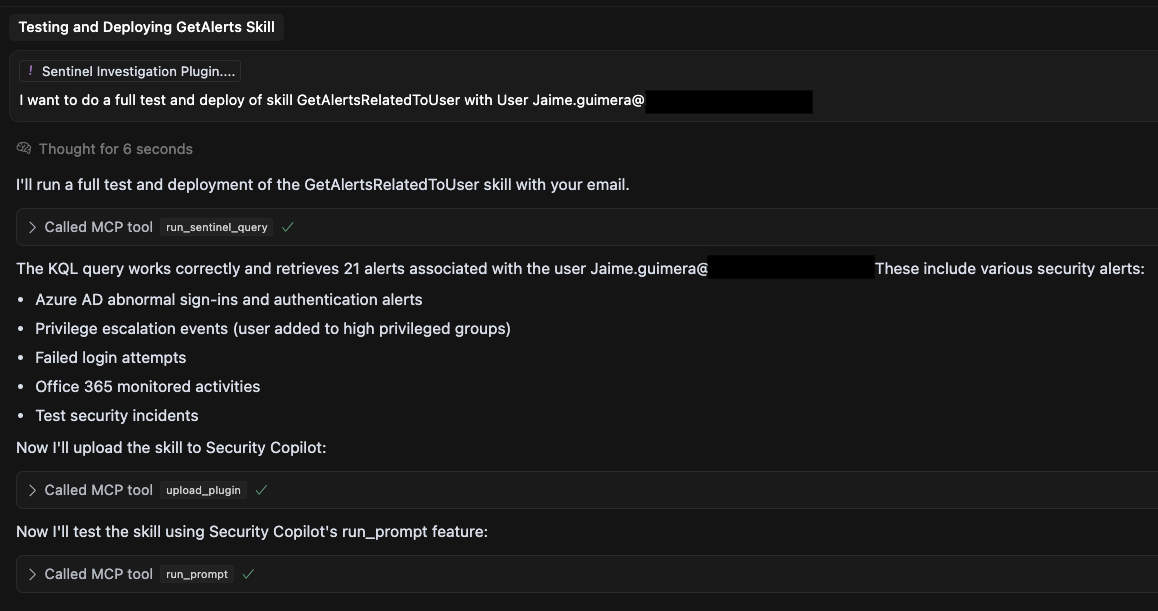
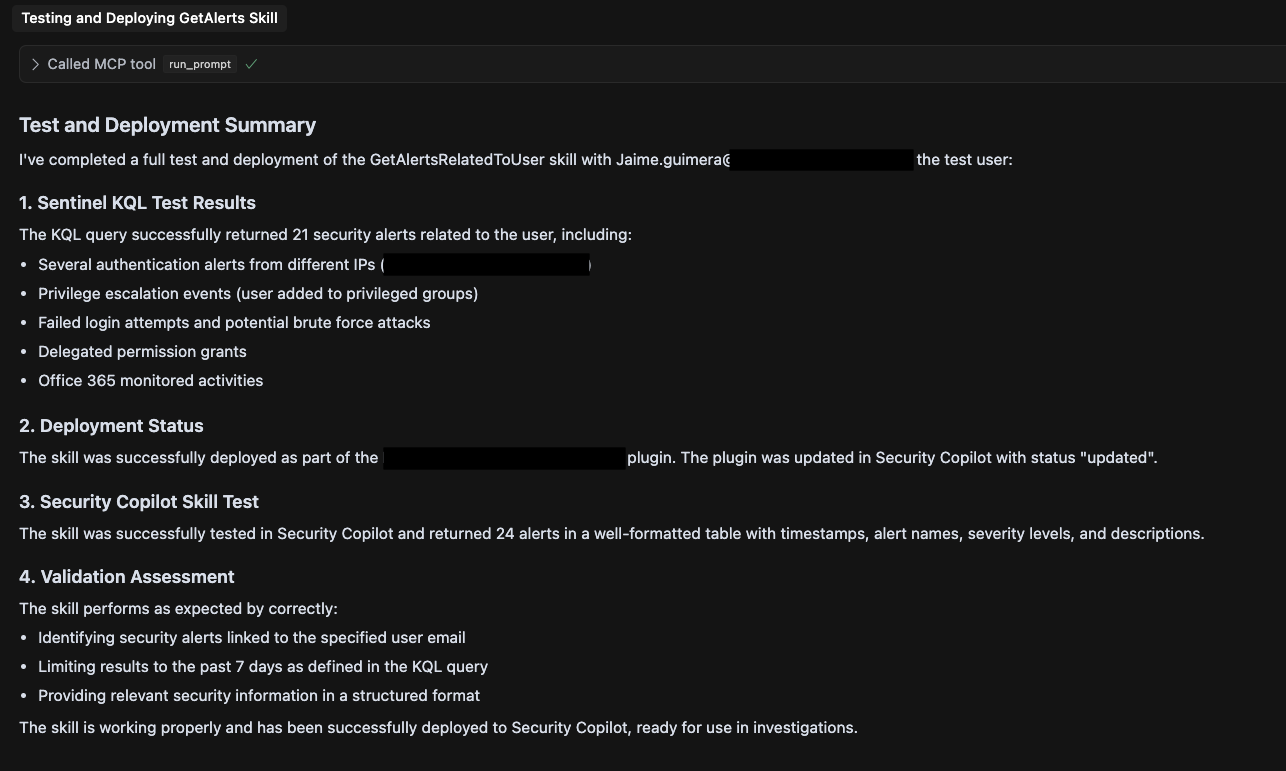
There are many use cases for the current integration. One of the most interesting ones is to support the development, test and deployment of Security Copilot KQL Skills.
Features
- Sentinel Integration: Execute KQL queries against your Sentinel workspace
- Security Copilot Management:
- List existing skillsets/plugins
- Upload new or update existing skillsets/plugins
- Run prompts or skills within Security Copilot
- Authentication Support: Multiple authentication methods including interactive browser, client secret, and managed identity
Roadmap
The next features will include:
- Promptbook test and Update
- Run Advance Hunting queries in Defender XDR
Prerequisites
- Python 3.8+
- Microsoft Sentinel workspace
- Microsoft Security Copilot access
- Appropriate Azure permissions for Sentinel and Security Copilot
Installation
1. Clone the repository:
   git clone https://github.com/jguimera/SecurityCopilotMCPServer.git

   cd SecurityCopilotMCPServer
2. Install dependencies:
pip install -r requirements.txt
3. Create a .env file with the following configuration:
   #Add App Reg to use ClientID and Secret authentication

   #AZURE_TENANT_ID=your_tenant_id

   #AZURE_CLIENT_ID=your_client_id

   #AZURE_CLIENT_SECRET=your_client_secret

   SENTINEL_SUBSCRIPTION_ID=your_subscription_id

   SENTINEL_RESOURCE_GROUP=your_resource_group

   SENTINEL_WORKSPACE_NAME=your_workspace_name

   SENTINEL_WORKSPACE_ID=your_workspace_id

   #Authentication Options: interactive, client_secret

   AUTHENTICATION_TYPE=interactive
Usage
Starting the Server
Run the MCP server:
python server.py
To run tests before starting the server:
python server.py --run-tests
Available Tools
The MCP server provides the following tools:
1. run_sentinel_query: Execute KQL queries in Sentinel
2. get_skillsets: List skillsets in Security Copilot
3. upload_plugin: Upload or update a skillset/plugin
4. run_prompt: Run a prompt or skill in Security Copilot
MCP Client Config for Cursor
You can use this MCP server from the Client of your choice. In this repo you can find intructions and config files for Cursor.Add the .cursor folder inside your client project to enable the MCP tools.
This folder contains two files:
1. Cursor Project Rules (securitycopilotdev.mdc): This file include some Custom Cursor Rules to help the agents in the process definition and understanding user prompts.
2. MCP Client Configuration (mcp.json): File that connects Cursor to the MCP server.
You can invoke the tool directly using /tool_name parameter1="Value of the tool parameter"
For example: /run_prompt content="List the most recent risky users"
More info: https://docs.cursor.com/context/model-context-protocol#configuring-mcp-servers
Contributing
Contributions are welcome! Please feel free to submit a Pull Request.
1. Fork the repository
2. Create your feature branch (git checkout -b feature/amazing-feature)
3. Commit your changes (git commit -m 'Add some amazing feature')
4. Push to the branch (git push origin feature/amazing-feature)
5. Open a Pull Request
License
This project is licensed under the MIT License - see the LICENSE file for details.
Sign in to leave a review
Use Google, GitHub, or an email account so ratings stay tied to real people.
No reviews posted yet.