
LSD MCP
About
LSD MCP is an MCP server that connects AI assistants to LSD, a platform offering a PostgreSQL-compatible database and a language for web data extraction. It is intended for users who want to leverage LSD’s dynamic tools, called “trips,” through their MCP client.
Details
- Author
- lsd-so
- Downloads
- 222
- Categories
- Other
Jump to
- Connects AI assistants to LSD’s PostgreSQL-compatible database.
- Supports dynamic tools defined as LSD “trips.”
- Allows custom skills via LSD language programs.
- Runnable from source or via MCP registry like Pulse.
- Extensible with TypeScript using the internetdata SDK.
Authenticate with your LSD account email and an API key via the ~/.lsd configuration file or by setting LSD_USER and LSD_PASSWORD environment variables. Add the server to your MCP client (e.g., Claude desktop) by specifying the command node and the path to the built index.js file from the cloned repository.
LSD MCP
This is the updated MCP server for LSD. The reason behind this update is to effectively leverage dynamic tools that are defined as trips using our SDK.
Contents
Getting started
Authenticating
Configuration file
Environment variables
Using an MCP registry
Pulse
From source
Example of usage
End to end
Interaction
Extraction
Extending capabilities with LSD
What is a trip?
From the bicycle browser
Using the language
Extending capabilities with TypeScript
Getting started
Authenticating
This is to connect the running MCP server with your account by using our SDK.
The reason for using the terms user and password is because what you're connecting to is our postgres compatible database.
Configuration file
In your home directory, write a JSON to a file named .lsd with the properties user and password with your email and an API key from your profile.
{
  "user": "<you@email.domain>",
  "password": "<api_key>"
}
Environment variables
Alternatively, you can set the environment variables LSD_USER and LSD_PASSWORD.
$ export LSD_USER='you@email.domain'
$ export LSD_PASSWORD='<api_key>'
Important: If you run into errors when taking this approach, check the environment variables set are accessible from the PATH or process the MCP client is invoking it from.
Using an MCP registry
Pulse
https://www.pulsemcp.com/servers/lsd-so-internetdata
More coming soon.
From source
1. Clone this repository
$ git clone https://github.com/lsd-so/mcp.git
2. If you're using Claude desktop, update your claude_desktop_config.json file (here's a guide for creating it).
{
  "mcpServers": {
    // other MCP servers configured here...
    "lsd": {
      "command": "node",
      "args": [
	    "/<path>/<to>/mcp/build/index.js"
      ]
    }
  }
}
Example of usage
Interaction
Extraction
Extending capabilities with LSD
For scenarios where you'd like to teach the MCP client a "skill", you can do so with an LSD trip (what is that?).
What is a trip?
A "trip" is a published module consisting of an LSD program whether it was derived by interacting with our local browser or by directly publishing a trip.
From the bicycle browser
From the Bicycle browser you can derive LSD by using our "click language", this can be activated by clicking on the transcriber icon in the top right:
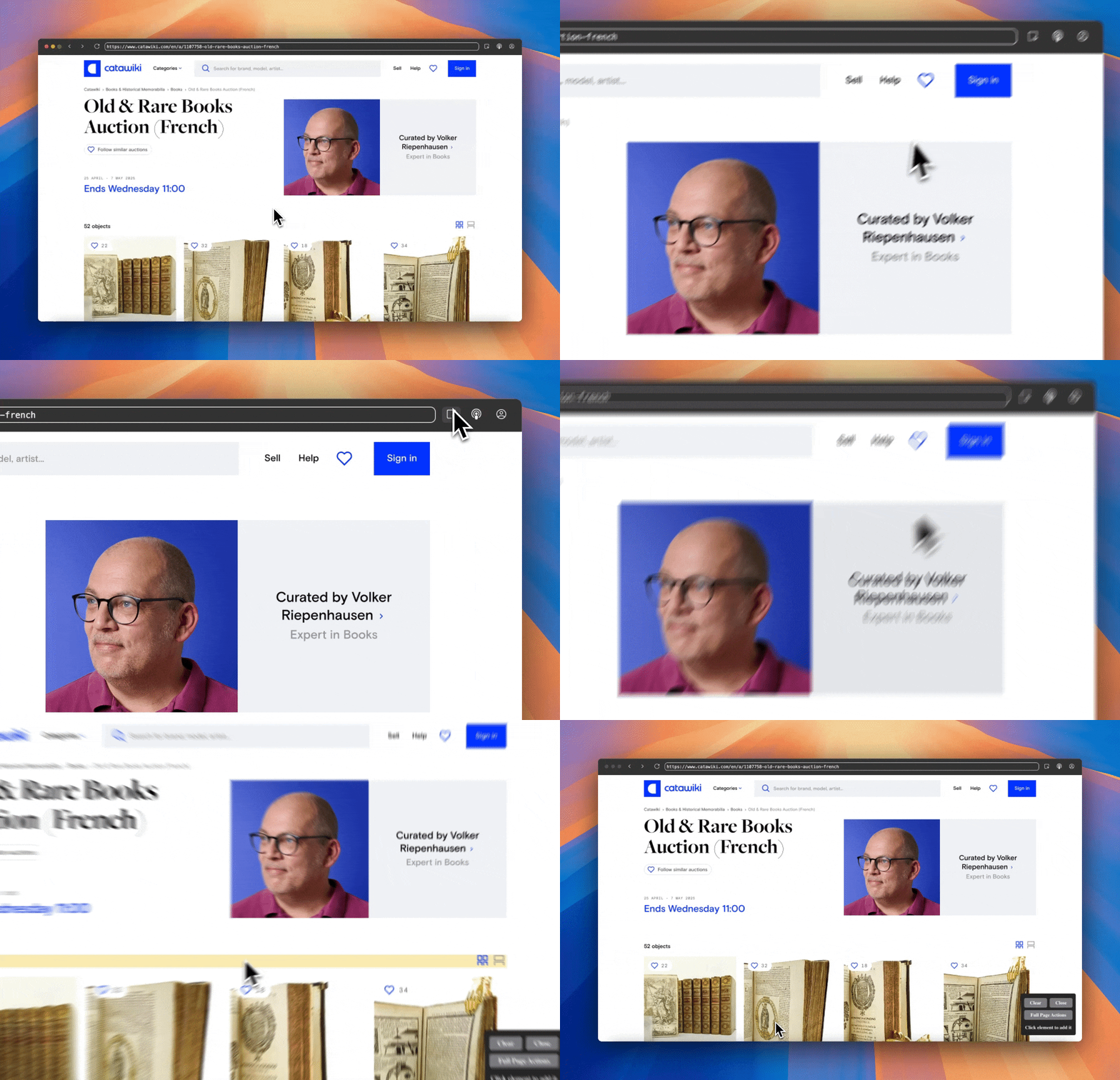
Or by pressing Command+k (or Ctrl+k for Linux/Windows). Once you've done so, you can interactively "pluck" repeating containers as well as fields of interest:
With the generated LSD, you can edit the aliases like so:
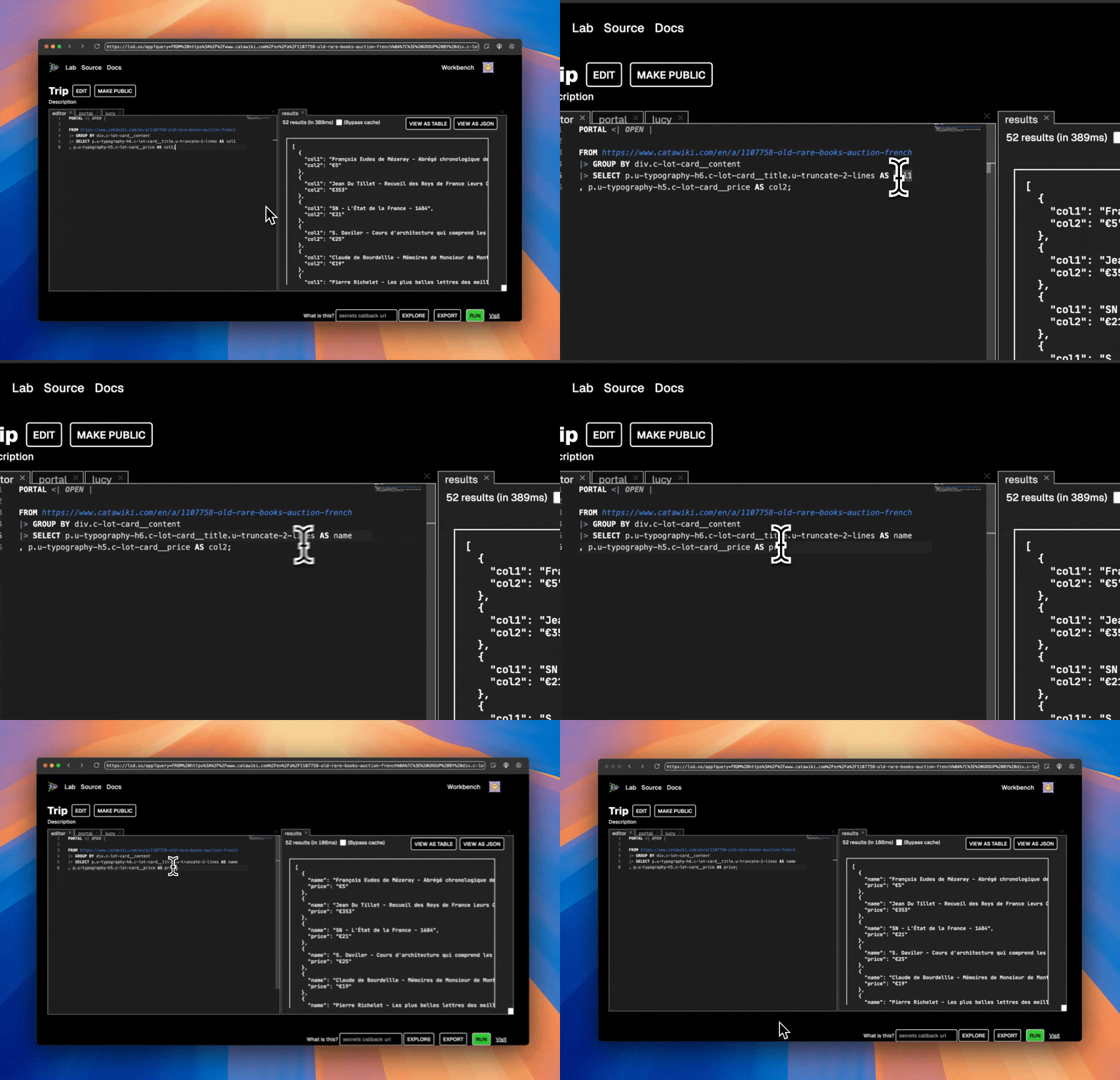
After which you can publish using the language.
Using the language
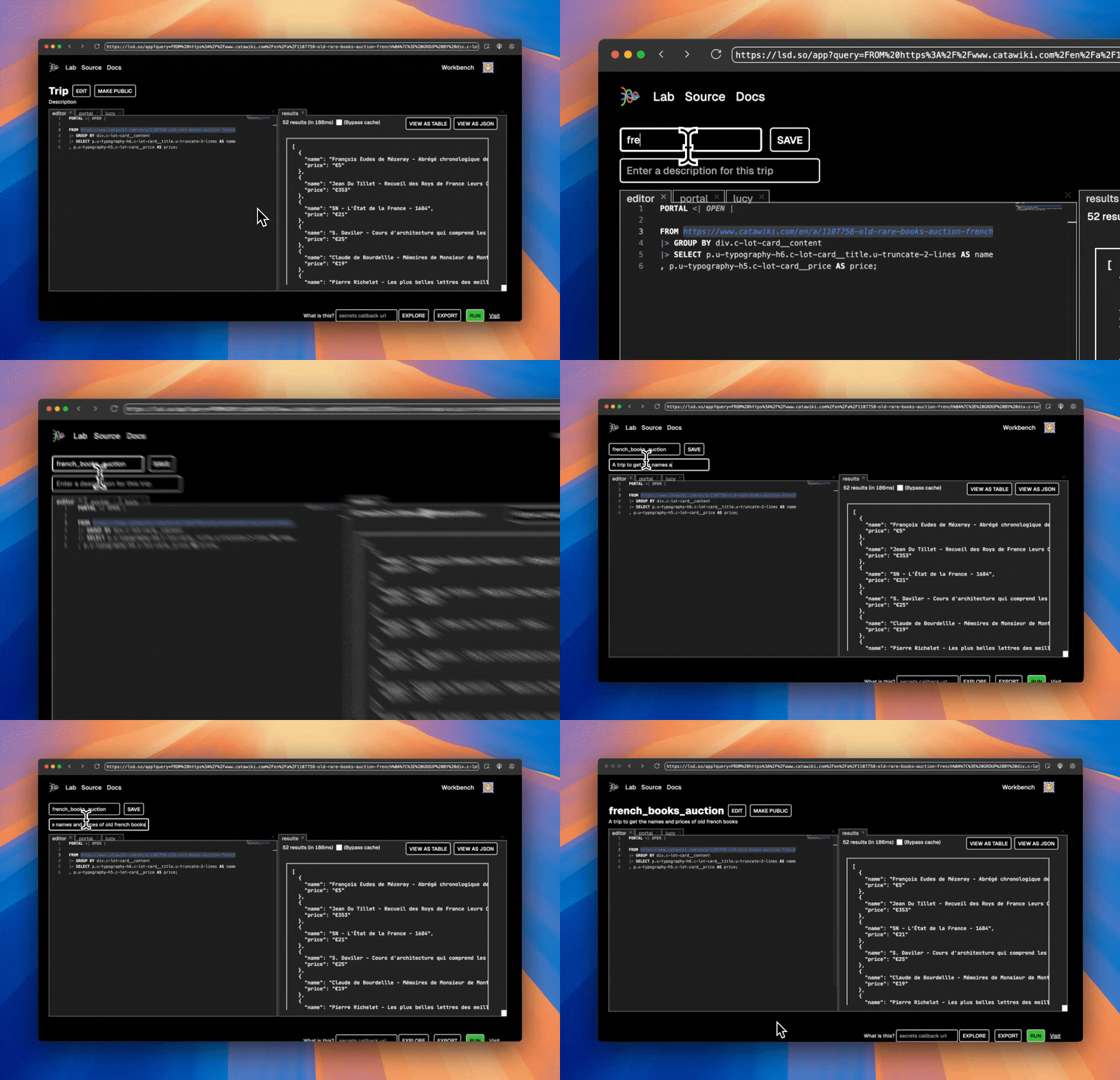
From the workbench, simply edit to publish a trip.
Extending capabilities with TypeScript
Check out the internetdata SDK that's used under the hood to bridge with the web. Or, alternatively, get started using the create-your-internet shorthand.
$ yarn create your-internet
Or, if you prefer npm
$ npm create your-internet
Sign in to leave a review
Use Google, GitHub, or an email account so ratings stay tied to real people.
No reviews posted yet.





