Asgardeo MCP Server
About
MCP server to interact with your Asgardeo organization through LLM tools
Details
- Author
- asgardeo
- GitHub stars
- 3
- Downloads
- 305
- Categories
- Other, AI
Jump to
- List, create, and update applications in your organization
- Configure application OAuth/OIDC and claim settings via tools
- Authorize APIs for applications with scopes
- Update login flows using natural language prompts
- Manage API resources, users, and claims
- Supports both Asgardeo and WSO2 Identity Server
Create an M2M application in your Asgardeo or WSO2 Identity Server tenant, authorize the required management API scopes, then clone the repository, install dependencies with go mod tidy, build the executable with go build -o asgardeo-mcp, and configure your MCP client (VS Code, Claude Desktop, or Cursor) with the absolute path to the binary and environment variables BASE_URL, CLIENT_ID, and CLIENT_SECRET. For WSO2 Identity Server, set PRODUCT_MODE to wso2is and optionally CERT_PATH.
Asgardeo MCP Server
The Asgardeo MCP Server allows you to manage your Asgardeo organization or WSO2 Identity Server deployment seamlessly using LLM tools, enabling natural language interactions for various configuration tasks.
> [!IMPORTANT]
> Experimental Feature Notice
> This software includes experimental functionality and is not intended for use in production environments.
> Features, APIs, and functionality may change as the implementation evolves without prior notice.
Key Use Cases
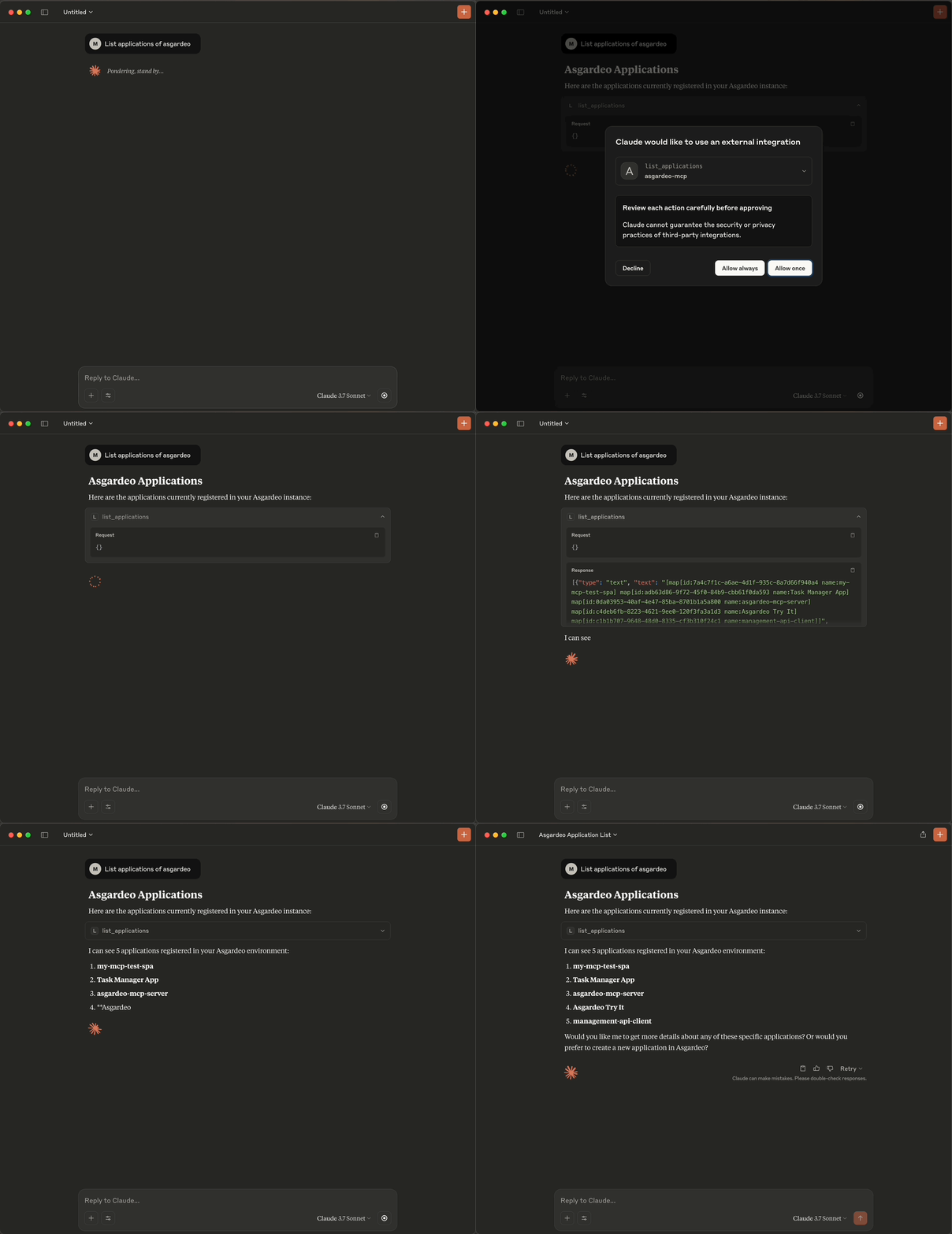
With tools like Claude Desktop, you can:- List Applications: Retrieve a list of all applications in your organization.
- Create Applications: Set up single-page, web, mobile or m2m applications and integrate it with the Asgardeo authentication SDK.
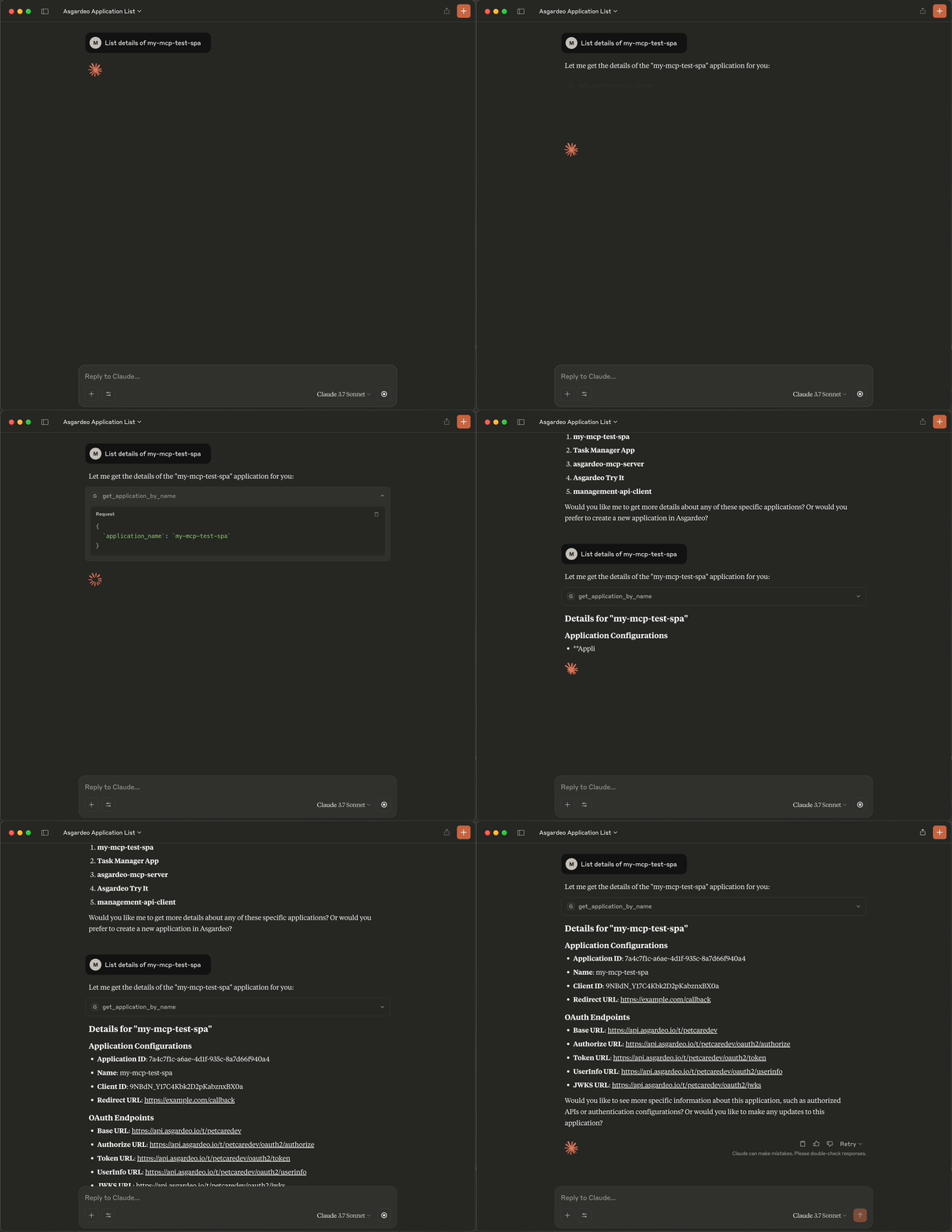
- Retrieve Application Details: Fetch detailed information about specific applications.
- Configure Login Flows: Customize the login flow of an application using natural language prompts and the available tools, enabling seamless user authentication experiences.
Demonstrations
- Listing Applications in Claude
- Fetching Application Details in Claude
---
How to Use
On Asgardeo / WSO2 Identity Server
1. Create an M2M Application: Set up an M2M application in your organization.
2. Authorize Management APIs: Grant the following scopes to the application:
| API | Scopes |
|-----|--------|
| Application Management API (/api/server/v1/applications) | internal_application_mgt_view, internal_application_mgt_update, internal_application_mgt_create |
| API Resource Management API (/api/server/v1/api-resources) | internal_api_resource_create, internal_api_resource_view |
| Identity Provider Management API (/api/server/v1/identity-providers) | internal_idp_view |
| Authenticators Management API (/api/server/v1/authenticators) | internal_authenticator_view |
| Claim Management API (/api/server/v1/claim-dialects) | internal_claim_meta_view |
| SCIM2 Users API (/scim2/Users) | internal_user_mgt_create |
| OIDC Scope Management API (/api/server/v1/oidc/scopes) | internal_oidc_scope_mgt_view |
3. Copy Credentials: Save the client ID and client secret of the M2M application.
On Your Machine
4. Clone the Repository:
git clone https://github.com/asgardeo/asgardeo-mcp-server.git
5. Install Dependencies:
go mod tidy
6. Build the Executable:
go build -o asgardeo-mcp
This will create the
asgardeo-mcp binary in the current directory (e.g., /Users/<user directory>/asgardeo-mcp-server/asgardeo-mcp). Note down this absolute path as you will need it in the next step.
7. Configure Your MCP Client:
VS Code (GitHub Copilot)
- Install the GitHub Copilot extension.
- Open the Command Palette (Ctrl+Shift+P / Cmd+Shift+P) and select MCP: Open User Configuration.
- Add the following server configuration to the mcp.json file:
  {

    "servers": {

        "asgardeo-mcp-server": {

            "type": "stdio",

            "command": "<absolute path to the asgardeo-mcp executable>",

            "args": [],

            "env": {

                "BASE_URL" : "https://api.asgardeo.io/t/<asgardeo organization>",

                "CLIENT_ID" : "<client ID>",

                "CLIENT_SECRET" : "<client secret>"

              }

            }

    }

  }
- Save the file and start the MCP server from
mcp.json.
Claude Desktop
- Open Claude Desktop and navigate to Settings > Developer.
- Edit the claude_desktop_config.json file:
  "asgardeo-mcp": {

   "command": "<absolute path to the asgardeo-mcp executable>",

   "args": [],

   "env": {

    "BASE_URL": "https://api.asgardeo.io/t/<asgardeo organization>",

    "CLIENT_ID": "<client ID>",

    "CLIENT_SECRET": "<client secret>"

   }

  }
- Restart Claude Desktop.
Cursor
- Open Cursor and navigate to Settings > MCP.
- Edit the mcp.json file:
  "asgardeo-mcp": {

   "command": "<absolute path to the asgardeo-mcp executable>",

   "args": [],

   "env": {

    "BASE_URL": "https://api.asgardeo.io/t/<asgardeo organization>",

    "CLIENT_ID": "<client ID>",

    "CLIENT_SECRET": "<client secret>"

   }

  }
> [!NOTE]
> - If you are using the WSO2 Identity Server, you need to set an additional environment variable named PRODUCT_MODE to wso2is.
> - Also, replace the BASE_URL with your WSO2 Identity Server base URL (e.g., https://<your-wso2is-host>/t/<tenant-domain>).
> - Additionally, if you are using WSO2 Identity Server for local development or in internal networks, you may need to set the certificate authority (CA) for the server to avoid SSL errors. You can do this by setting the CERT_PATH environment variable to the path of your CA certificate file.
---
Available Tools
The Asgardeo MCP Server provides the following tools for interacting with your organization:
Application Management
| Tool Name | Description | Parameters |
|-----------|-------------|------------|
| list_applications | Lists all applications in your organization | None |
| create_single_page_app | Creates a new Single Page Application | application_name (required): Name of the application<br>redirect_url (required): Redirect URL for the application |
| create_webapp_with_ssr | Creates a new web application with server-side rendering | application_name (required): Name of the application<br>redirect_url (required): Redirect URL for the application |
| create_mobile_app | Creates a new Mobile Application | application_name (required): Name of the application<br>redirect_url (required): Redirect URL for the application |
| create_m2m_app | Creates a new Machine-to-Machine Application | application_name (required): Name of the application |
| get_application_by_name | Gets details of an application by name | application_name (required): Name of the application to search for |
| get_application_by_client_id | Gets details of an application by client ID | client_id (required): Client ID of the application |
| update_application_basic_info | Updates basic information of an application | id (required): ID of the application<br>name, description, image_url, access_url, logout_return_url (optional) |
| update_application_oauth_config | Updates OAuth/OIDC configurations of an application | id (required): ID of the application<br>redirect_urls, allowed_origins, user_access_token_expiry_time, application_access_token_expiry_time, refresh_token_expiry_time, etc. (optional) |
| update_application_claim_config | Updates claim configurations of an application | id (required): ID of the application<br>claims (required): List of requested claim URIs (Claim URIs should be specified using the default WSO2 claim dialect. Eg: http://wso2.org/claims/username) |
| authorize_api | Authorizes an application to access an API | appId (required): ID of the application<br>id (required): ID of the API resource<br>policyIdentifier (required, default: "RBAC"): Authorization policy<br>scopes (required): Scopes to authorize |
| list_authorized_api | Lists authorized API resources of an application | app_id (required): ID of the application |
| update_login_flow | Updates login flow in an application based on a natural language prompt | app_id (required): ID of the application<br>user_prompt (required): Natural language description of the desired login flow |
API Resource Management
| Tool Name | Description | Parameters |
|-----------|-------------|------------|
| list_api_resources | Lists API resources in your organization | filter (optional): Filter expression<br>limit (optional): Maximum results to return |
| search_api_resources_by_name | Searches for API resources by name | name (required): Name of the API resource to search for |
| get_api_resource_by_identifier | Gets an API resource by its identifier | identifier (required): Identifier of the API resource |
| create_api_resource | Creates a new API resource | identifier (required): Identifier for the API resource<br>name (required): Name of the API resource<br>requiresAuthorization (required): Whether the API requires authorization<br>scopes (required): List of scopes for the API |
User Management
| Tool Name | Description | Parameters |
|-----------|-------------|------------|
| create_user | Creates a user in your organization | username (required): Username<br>password (required): Password<br>email (required): Email address<br>first_name (required): User's first name<br>last_name (required): User's last name<br>userstore_domain (optional, default: "DEFAULT"): Userstore domain |
Claim Management
| Tool Name | Description | Parameters |
|-----------|-------------|------------|
| list_claims | Lists claims in your organization | None |
> [!NOTE]
> If you are using the WSO2 Identity Server and planning to use update_login_flow tool, make sure to follow the steps in Subscribe to AI features.
---
Example Prompts
Application Management
- Create a SPA:
Create a new Single Page Application named "My Demo App" with redirect URL "https://example.com/callback".
- Update Application:
Update my application with ID "abc123" to have a new name "Updated App".
- Update Application Login Flow:
Update the login flow of my application with ID "abc123" to Username and Password as the first step and Email OTP as the second step.
- Update Application Claim Configuration:
Update the claim configuration of my application with ID "abc123" to include "username", and "last_name".
API Resource Management
- Create and Authorize API:
Create a new API resource named "Customer API" and authorize my application to access it with "read:customers" scopes.
User Management
- Create a User:
Create a test user with the username and email address 'test@example.com'.
Claim Management
- Get Claim list:
List all claims in my Asgardeo organization.
---
Troubleshooting
Authentication & Permissions
- Invalid Credentials: Verify your client ID, client secret, and organization name in the base URL - 403 Forbidden: Check if your M2M application has all required scopes authorizedSetup & Connection
- Build Issues: Ensure Go 1.18+ is installed, rungo mod tidy before building
- MCP Connection: Verify executable path is absolute and correct, check permissions (chmod +x asgardeo-mcp)
Getting Help
If issues persist after troubleshooting: - Check GitHub issues - Create a new detailed issue including error messages and environment info - Join the WSO2 community forums for support---
Contributing
Contributions are welcome! Submit issues or pull requests via the GitHub repository.
Sign in to leave a review
Use Google, GitHub, or an email account so ratings stay tied to real people.
No reviews posted yet.